
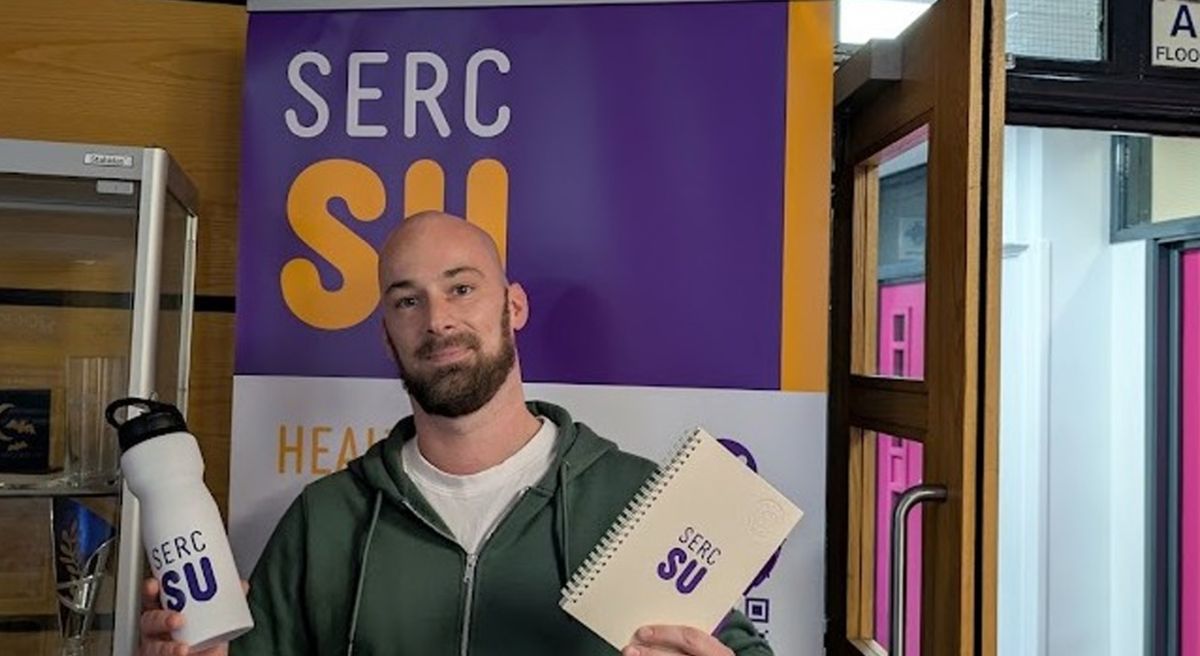
As part of the Movember campaign, our SU Officers wanted to highlight the importance of speaking up about mental health and the support available to you as students here at SERC.
Movember is a global men’s health awareness movement, held every November, where people—especially men—grow moustaches to raise awareness and funds for prostate cancer, testicular cancer, mental health, and suicide prevention.
Take five minutes to read on, or watch the video, and use the information to start conversations with your friends and family, or to take the first step to getting help if you need it.
Ben Westbury, Vice President, SU Lisburn Campus
Mental health can affect every part of our lives, and sometimes it can be really difficult to admit when you’re struggling or when things just don’t feel right. But you don’t have to deal with everything on your own.
From personal experience, I know just how much of a difference talking about your mental health can make. Taking that first step and opening up to someone isn’t always easy, but it can be the first step towards making things better. You don’t need to have all the right words or know exactly what to say. Sometimes simply telling someone, “I’m struggling at the minute” or “I’m not doing great” is enough to start that conversation.
So this Movember, we want to encourage you, our students, to speak out, check in with each other and, most importantly, ask for help when you need it. If you’re a SERC student and you’re struggling with your mental health, you can talk to a member of the Students’ Union team, or you can contact Lena by Inspire for support.
You don’t have to go through things alone. Speaking up isn’t a sign of weakness. It could be the first step towards things getting better.
Hannah Potter, Health & Wellbeing Officer, SU Lisburn Campus
Mental health affects every part of your life; how you think, how you feel, how you act, and how you cope with everyday problems. When your mental health is bad, it can make even simple things feel overwhelming.
A lot of people try to deal with it alone because they think asking for help makes them weak, but it’s one of the strongest things you can do. Reaching out shows you care about yourself enough to try and feel better. The first step is admitting you’re struggling. That might feel scary, but it’s the moment things can start to change. Talking to someone you trust; a friend, a parent, or a teacher. It can make a huge difference. You don’t need a big explanation. Just saying “I’m not doing great” is enough.
There are also proper services that exist to support you: you can talk to SERC support staff or ring our dedicated 25/7 support through LENA. Outside of school, you can speak to your GP or a mental health professional who can offer advice or refer you to youth mental health services.
If talking in person feels too hard, there are helplines and text services where you can message someone privately. Online mental health platforms also give you tools, information, and support without having to speak face-to-face. Getting help doesn’t fix everything instantly, but it makes things lighter. It gives you support, understanding, and a way forward. The most important thing is not staying silent. Asking for help isn’t giving up, it’s choosing to get better and reminding yourself that you deserve support just as much as anyone else.
Steven Jones, Health and Wellbeing Officer, Bangor Campus
Breaking the stigma about mental health. You don’t have to be at breaking point to talk. Eight years ago, I lost my mum. My mental health suffered terribly afterwards, and among the things I kept hearing were “man up” and phrases like it.
What I needed was support, understanding and space to grieve. Being told to toughen up didn’t make the grief easier. It made speaking about it harder.
It took me six years to reach out for counselling. Six years before I took that step and talked about what I was carrying. Counselling hasn’t taken away the loss, but I’m now in a better position to deal with the grief and understand the impact it’s had on my life.
As your SU Health & Wellbeing Officer, I want to use this month to focus on men’s mental health, because this is personal to me. I’m sharing my story so you know you’re not alone in whatever you’re dealing with. Your experience might look different from mine, but you deserve to be heard and supported just as much.
College doesn’t happen separately from life. Grief, money worries, relationships, family responsibilities and uncertainty about the future come through the door with us. Someone can turn up, have a laugh and get their work done while struggling with things nobody else sees. You don’t need to wait six years, and you don’t need to reach breaking point before you deserve support.
Our college counselling service, LENA, is somewhere you can reach out to for support. If you’re unsure how to access it, ask Student Support to help you take that first step. We can all play a part, too. Check in with a friend. Ask how they’re doing and give them time to answer. You don’t need to have the perfect words or solve every problem. Listening and taking someone seriously matters. This month, let’s replace “man up” with “I’m here—do you want to talk?”
You’re allowed to grieve. You’re allowed to struggle. You’re allowed to ask for help.
If you are struggling with your mental health, you can talk to a member of the Students’ Union team, or you can contact Lena by Inspire for support.